
Introduction
Mobile gaming has surged unlike ever before. Titles that once felt simple have evolved into rich, complex, competitive arenas. As mobile hardware improves and networks become more robust, the boundary between console, PC, and mobile gaming steadily fades. At the center of this transformation is 5G, the fifth generation of cellular network standards. With promises of ultra-low latency, vastly greater bandwidth, better reliability, and higher device densities, 5G doesn’t just marginally improve mobile esports—it reshapes the very foundation upon which competitive mobile gaming is built. In this blog post, we will explore in detail how 5G is transforming mobile esports experiences: what is changing, what new possibilities are opening up, and what challenges must still be addressed.
Low Latency: Redefining Real-Time Interactions
One of the most critical performance parameters in any competitive game is latency—how quickly an action by the player is transmitted to the server and back, and how quickly it appears in their game environment. Any noticeable delay can degrade performance, spoil timing, and disrupt competitive fairness.
With traditional 4G networks, latency often ranges in tens to hundreds of milliseconds depending on location, load, and infrastructure. Even a delay of 100 ms can result in missed shots, mistimed dodges, or unresponsive controls in fast action games.
5G promises latency as low as 1–10 milliseconds. That kind of responsiveness bridges the lacuna between mobile and wired competitive gaming. Players can make split-second decisions, fast reflexes become meaningful again, and micro‐maneuvers that were once the exclusive domain of console or PC gamers become accessible on mobile. For example, dodging an opponent’s attack or executing perfect timing in a hero’s skill becomes viable.
This ultra‐low latency also enhances spectator interactivity. In mobile esports broadcasts or live streams, features like interactive polls, real‐time overlays, and audience participation benefit when the network lag is negligible. Viewers can engage without frustration, and shared experiences feel more immediate.
Bandwidth and High Throughput: Richer Visuals and Larger-Scale Events
Beyond latency, bandwidth is another dimension through which 5G changes the mobile esports equation. High throughput means more data per second, which allows higher resolution textures, richer detail, faster content updates, smoother streaming, and more stable performance even under heavy load. This improves both player experience and what viewers see.
Mobile game developers can employ more visually ambitious graphics engines, more detailed physics simulations, and more complex character models. Esports titles that rely on environmental detail for tactical advantage (such as cover, sightlines, terrain) can give players crisper visuals. What once might have required high‐end devices or gaming laptops can now be streamed or processed via cloud, while maintaining fluid experience on mid‐range phones.
Moreover events can support greater numbers of participants, whether in massive tournaments with dozens or even hundreds of mobile players, or in massive spectating audiences streaming high‐quality video with minimal buffering. With 5G, turning a mobile esports final into a seamless, globally watched spectacle becomes more feasible.
Cloud Gaming and Edge Computing: New Infrastructure Models
An equally important transformation comes from the shift toward cloud gaming and the utilization of edge computing. Because 5G reduces latency and increases bandwidth, processing can be shifted off the device and into the cloud or edge servers without compromising responsiveness.
Cloud gaming means that a powerful server, perhaps thousands of miles away, handles most computation: rendering graphics, resolving physics, computing complex logic. The mobile device essentially becomes a display and input device. The advantage is that even devices with modest hardware can run visually rich games, as the heavy lifting is performed elsewhere.
Edge computing takes this further by placing compute capacity closer to the user—at cellular base stations or local data centers. Because the distance data needs to travel is much reduced in edge setups, latency drops even more. For esports, where every millisecond can count, edge servers can help ensure that player inputs are registered with minimal delay.
Together, cloud gaming and edge computing allow tournaments to be run with trophy‐level game engines even on mobile devices, enable more consistent competitive environments, and reduce issues like thermal throttling and battery drain on phones.
Mobile Esports Event Streaming: Enhanced Spectator Experience
Esports isn’t just about players. Spectators form a large, essential audience, watching, cheering, analyzing. The spectator experience is under rapid transformation thanks to 5G.
High‐definition live streaming becomes more stable. Viewers can switch between multiple camera angles with ease. They can stream on mobile devices without buffering, lag, or loss of visual fidelity even in crowded places. Interactive overlays (real‐time stats, on‐screen chat, trivia) can update with minimal delay so that the gap between what is happening in the stadium or on the server and what viewers see is small enough that they feel included.
Beyond watching, spectators can more readily participate. Real‐time audience features, such as choosing the camera view or prediction contests, become smoother. Some event organizers explore mixed reality or augmented reality features to overlay game action onto physical spaces; 5G supports these by supplying the needed throughput and low latency. Spectators in physical locations, for example arenas or public viewing spaces, can also get richer content via AR on their phones, synchronized with the live game.
Multiplayer Innovation: Larger Scales, Smoother Coordination
5G unlocks possibilities in multiplayer design that previously were difficult on mobile. Games that require large numbers of players in a single match, or very precise synchronization among players, benefit especially. Massive battle royales, real‑time strategy games, or MOBA‑style games with lots of concurrent effects all pose high demands on network architecture.
Thanks to 5G, game designers can push the number of players or the complexity of interactions higher. They can introduce features like dynamic environmental changes, large crowds, physics‐driven effects, or even real‐world location interaction layered in. Because delays in synchronization among players are less, competitive integrity improves. Input discrepancies, lag spikes, teleporting players or rubber‑banding issues reduce greatly when networks perform closer to ideal.
On the coordination front, voice chat, team strategy communications, and live reactions are more reliable and crisp. Players can plan in real time, respond quickly to opponents, and change tactics on the fly without worrying about network jitter or congestion ruining communication.
Geographical Reach and Global Competition
With 5G’s rollout across many more regions and improved infrastructure worldwide, mobile esports becomes more inclusive. Players in places that lacked high‐speed wired broadband or fiber to the home can now access high‑quality competitive gaming via wireless. Rural or less developed regions, or places with less mature internet backbones, stand to benefit the most.
Global tournaments that require participants from many different regions become more viable, with fewer of the “who has the best ISP or the fiber backhaul” disrupting fairness. When latency is more uniformly low, and bandwidth more consistently available, geographic disparity drops. Players in remote locations can compete on more level ground.
This also helps push forward emerging esports markets. Regions where mobile gaming is already popular but network infrastructure lagged behind can now host competitive events, build local esports cultures, and contribute significantly to the global scene. That helps move talent discovery, investment, and audience growth in new directions.
Device and Power Efficiency Implications
While 5G brings major network improvements, its effects on devices and power consumption are nontrivial. High data rates and constant connectivity can strain both battery life and device components. Game developers, hardware makers, and network providers must collaborate to mitigate these.
Smart energy management becomes important. Phones will increasingly rely on efficient network chipsets, adaptive networks that shift between 5G, lower‑power 4G or WiFi depending on load, and better thermal management. Otherwise, the performance gains of 5G can be offset by devices heating up, throttling, or draining battery too quickly, which negatively impacts competitive play.
On the upside, with cloud or edge compute reducing in‑device processing, some load shifts off the phone. Graphics rendering, AI, physics calculations can happen elsewhere, reducing CPU/GPU usage on the device itself. This helps preserve battery and reduce heat. As devices become more optimized for 5G, hardware manufacturers are likely to build phones with better cooling, more efficient radio chips, and other design changes to support prolonged esports play under 5G.
Emerging Game Designs Enabled by 5G
The network opportunities open doors for game design innovation. Several styles of games or features that were previously difficult or impossible on mobile now become feasible thanks to 5G.
One is augmented reality (AR) games at scale. AR games require real‑time environmental scanning, coordination, overlaying of graphics, sometimes across multiple users sharing a space. These are heavy demands on both data and latency. With 5G, multi‑player AR games where users physically move around become more practical. Competitive AR tournaments could involve teams in real spaces, interacting with both physical and virtual worlds simultaneously.
Another is cross‑platform synergy. With faster networks, synchronization with consoles, PCs, or VR becomes more seamless. Players might compete in mobile vs. PC modes with minimal unfair advantage, or spectate a match from one device while another device handles interaction. Hybrid esports events become possible where part of the audience interacts via mobile, part via VR, etc.
Also real‑time procedural content, dynamic world changes, large‑scale physical simulations become more frequent. Game worlds can evolve in response to many players’ actions, and that evolution can be broadcast live to all participants with minimal lag.
Challenges and Limitations
No transformation is without hurdles. While 5G opens many doors, there are still limitations and things to work through.
Infrastructure coverage varies. In many areas, 5G is still being rolled out; in others, it exists in name but with limited capacity or inconsistent performance. Players in regions with weak or intermittent 5G service may not see much benefit yet.
Device compatibility is another issue. Not all mobile devices have hardware that fully supports the higher bands or features of 5G (for example mmWave, beamforming). Users with older devices might still suffer from weak signal, slower network fallback, or inability to take full advantage of 5G’s potential.
Network congestion can still occur, especially in dense environments like stadia or urban centers. If too many devices are accessing the network at once, performance may degrade. Bandwidth might be shared or throttled, which reduces the improved responsiveness.
Also the cost side matters. 5G infrastructure is expensive for telecom operators. Rolling out edge servers, ensuring sufficient backhaul, maintaining high‑capacity fiber links, and ensuring regulatory compliance all involve cost. On the user end, data plans with enough bandwidth, costs of upgrading devices, or premium fees can present barriers.
Security, privacy, fairness all remain concerns. With more data flowing, including possibly sensitive data (e.g. location in AR games), ensuring that user data is protected is vital. Also, maintaining fairness when players have different network quality is still a challenge—tournament organizers must account for cases where some players may have rougher network conditions.
Real‑World Examples and Case Studies
To move beyond theory, it helps to look at how 5G is already influencing mobile esports around the world.
In certain countries with advanced 5G deployments, tournaments have begun using cloud gaming platforms that let even moderate phones participate in high performance matches. These demonstrate how latency has been lowered and how streaming between players and spectators is smoother.
Some AR mobile games have experimented with live events where participants share a physical space while engaging virtually, overlaying game assets, effect zones, dynamic lighting—all possible with synchronized, low‑lag connections.
Game publishers are experimenting with features like instant match replays, multiple camera angles streamed to mobile devices, and spectator modes that allow viewers to jump into live matches or see detailed stat overlays in real time.
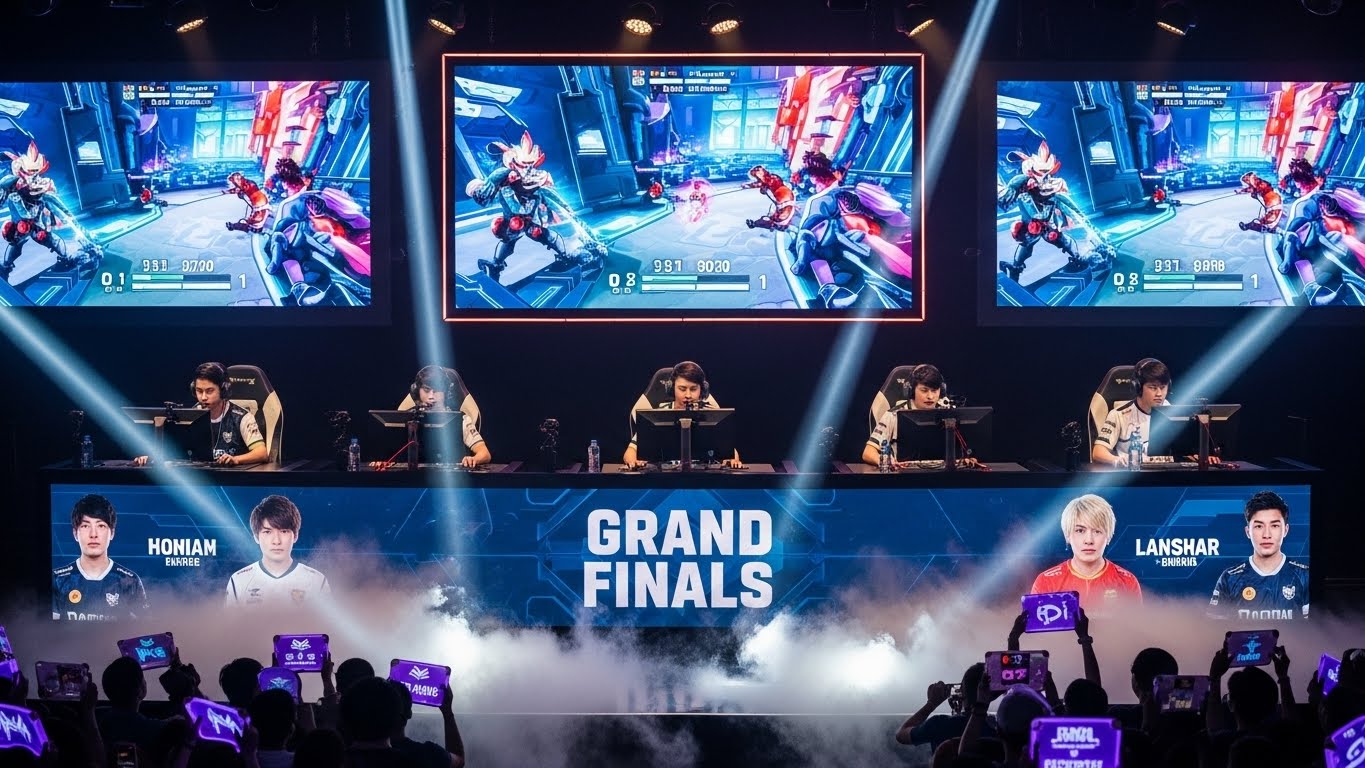
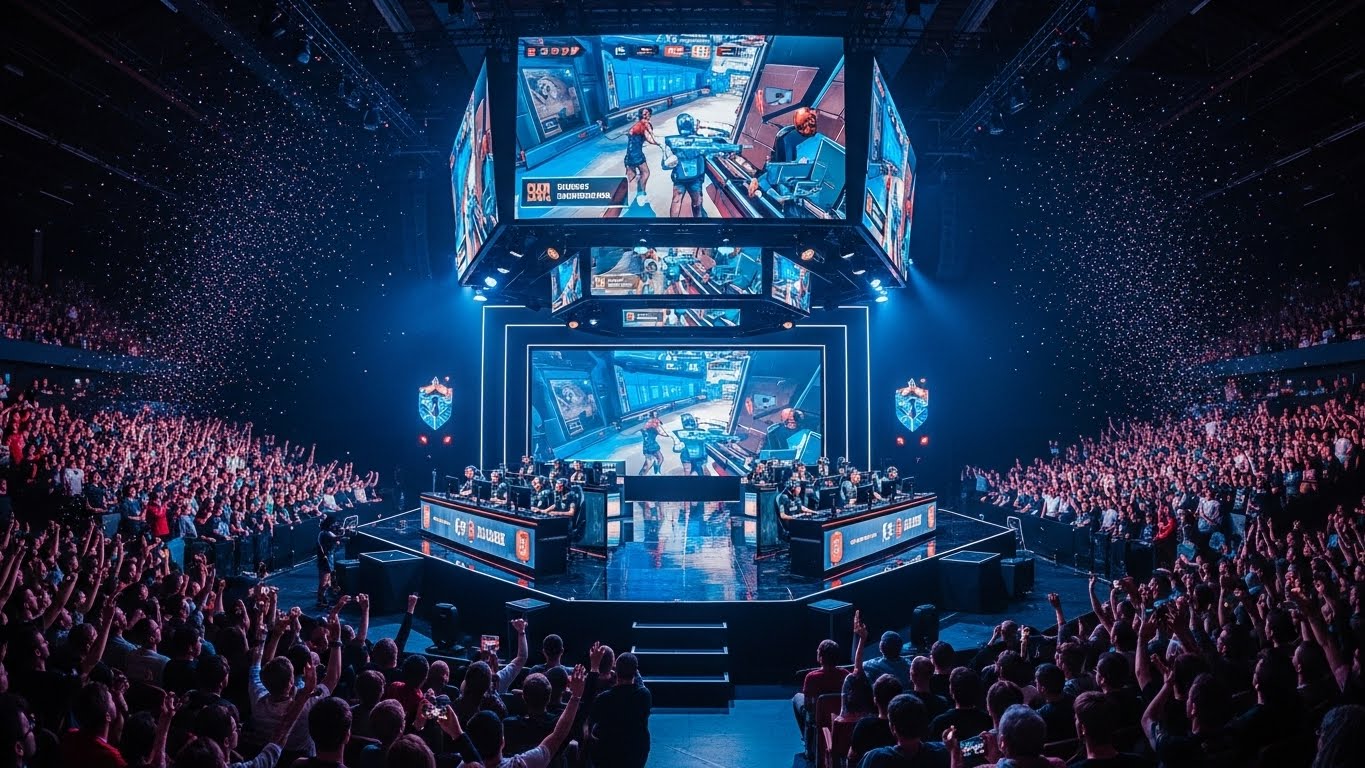
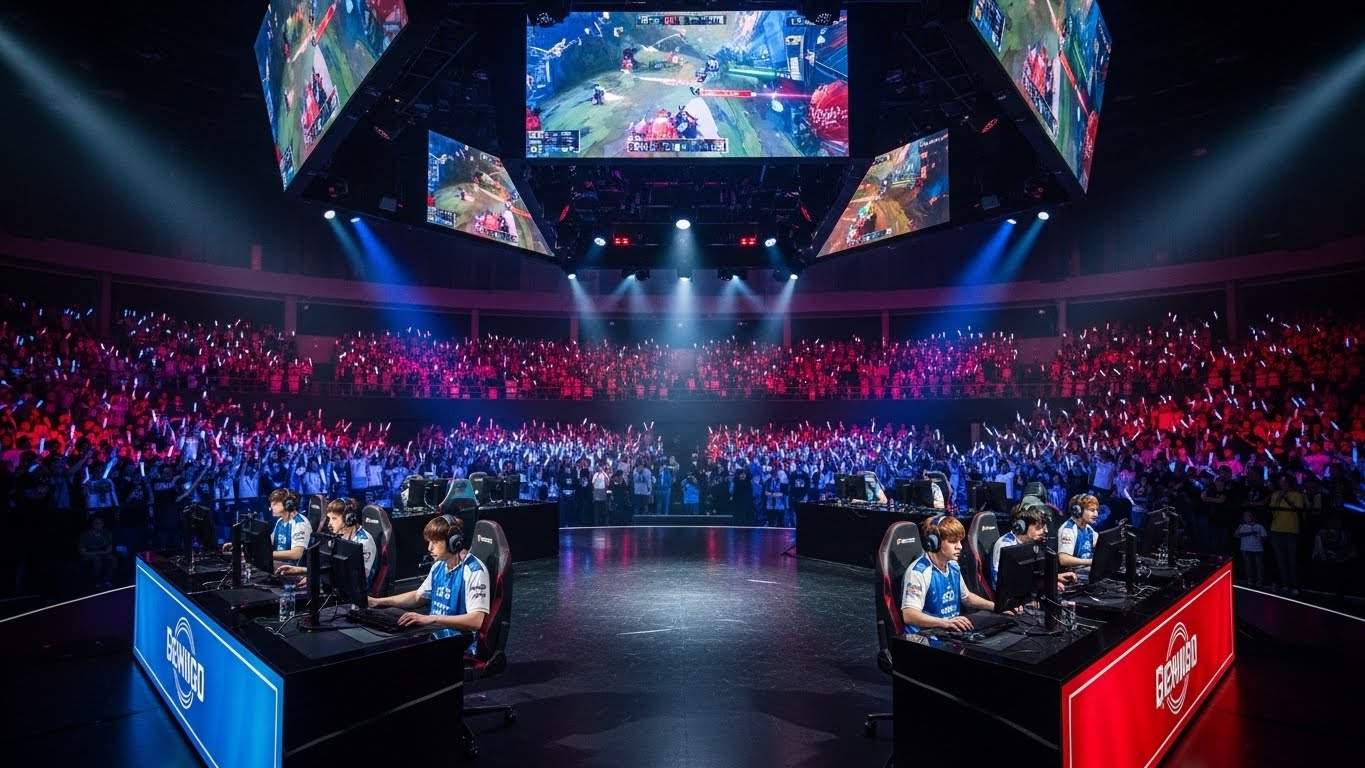
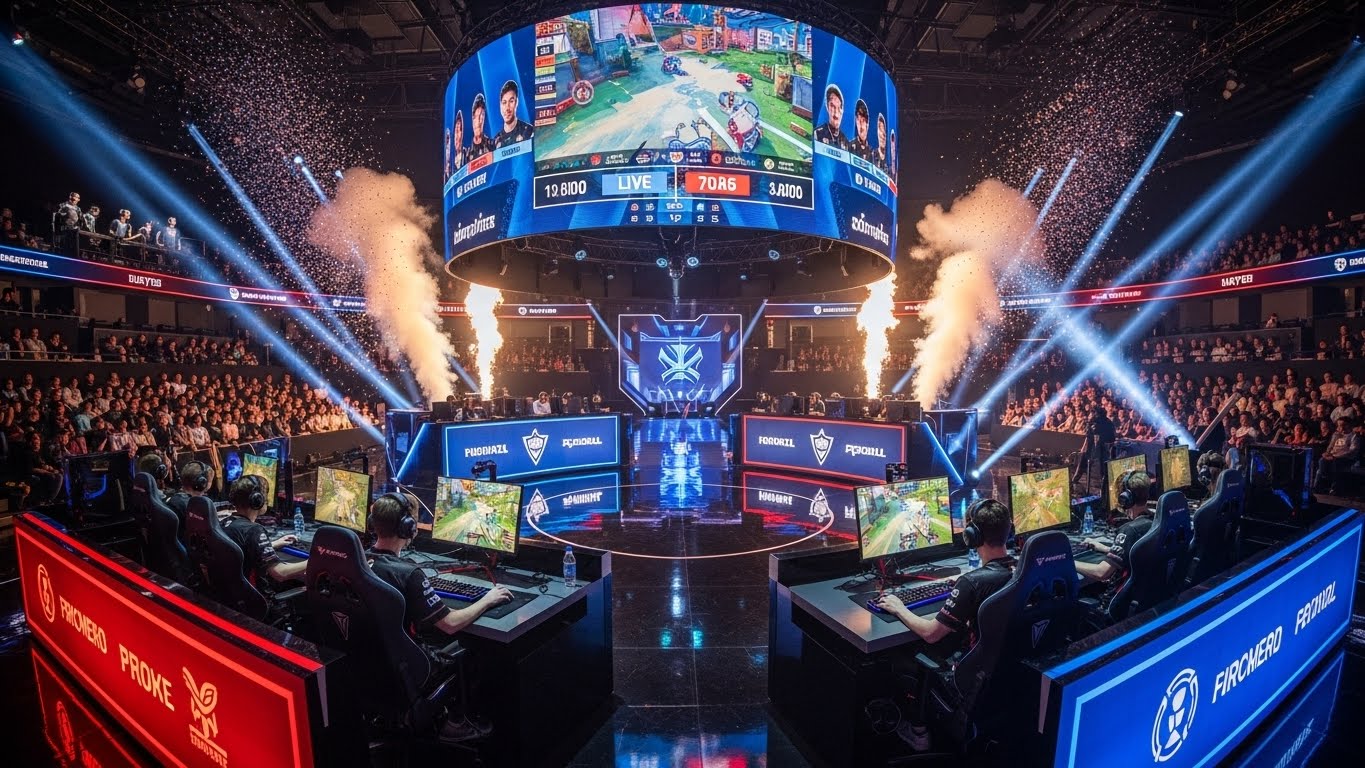
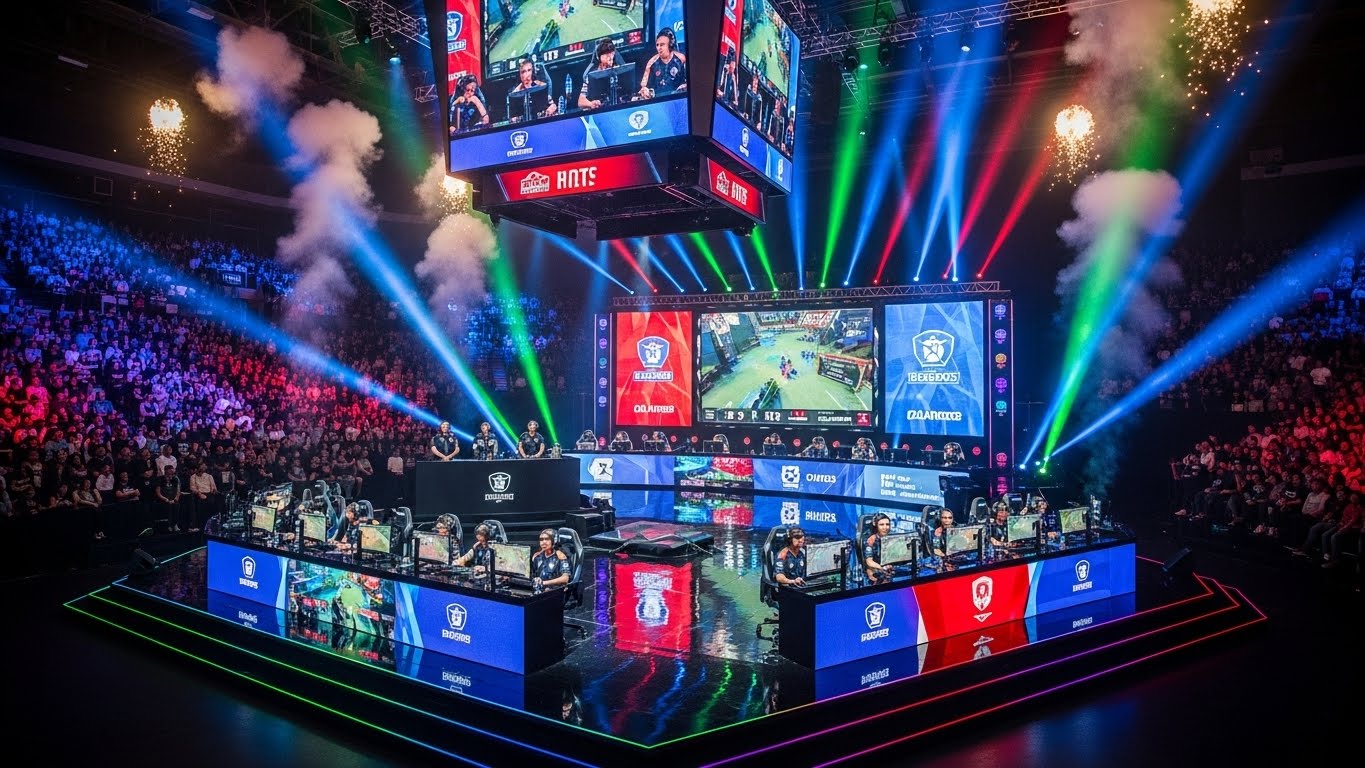
Tournament organizers are running mobile esports finals in urban centers and stadiums where thousands of fans watch on mobile screens or giant shared displays, relying on 5G networks to broadcast the matches inside the venue without delay or signal loss.
The Future of Mobile Esports with 5G
Looking ahead, what will mobile esports look like in a fully 5G‑enabled world?
Ultra‑realistic competition on any device becomes a baseline expectation. Players will expect high frame rates, rich visuals, near‐instant input response, and minimal delays. Mobile may no longer be seen as a lesser platform for competition but as a center stage.
We may see expansive cross‑platform tournaments where mobile devices compete alongside consoles, PCs, and even emerging mixed reality systems. Esports leagues could standardize network expectations, possibly even require certain network latency thresholds for participation.
Spectators will expect more immersive experiences. Augmented reality overlays, mixed reality content, virtual spectatorship, maybe even personalized camera angles or VR replays might become commonplace. In‑arena viewers might access special 5G services that allow real‑time stats, interactive content, or AR enhancements during the live event.
Furthermore, new monetization models might arise based around cloud‑gaming subscriptions, network providers bundling esports services, or AR experiences linked to broadcast. Infrastructure providers might partner more closely with game studios to deliver optimized delivery pipelines, edge server deployments tailored for esports, and quality of service guarantees for competitive events.
Conclusion
5G is more than a faster network. It represents a paradigm shift for mobile esports. With lower latency, greater bandwidth, cloud and edge computing, and new device efficiencies, mobile competitive gaming is stepping into a new era. The spectator experience, tournament scale, geographic reach, game design possibilities—all are being reshaped.
Still, challenges like infrastructure gaps, cost, device limitations, and fairness must be addressed for this promise to be fully realized. But the direction is clear: mobile esports is transforming in front of us. What once felt like possible sci‑fi game features are becoming real every day, and as 5G becomes more widely established, the world of mobile esports will continue to evolve into something far more immersive, inclusive, and exhilarating.
If you follow developments in mobile esports, keep an eye on how network technology, cloud platforms, and game design all intersect. As 5G matures, what we consider standard today may be surpassed tomorrow—and mobile esports will not merely follow; it will lead.